
Winter Destinations
Winter in the Dolomites Without a Car: A Local Train-and-Bus Itinerary
October 14, 2026
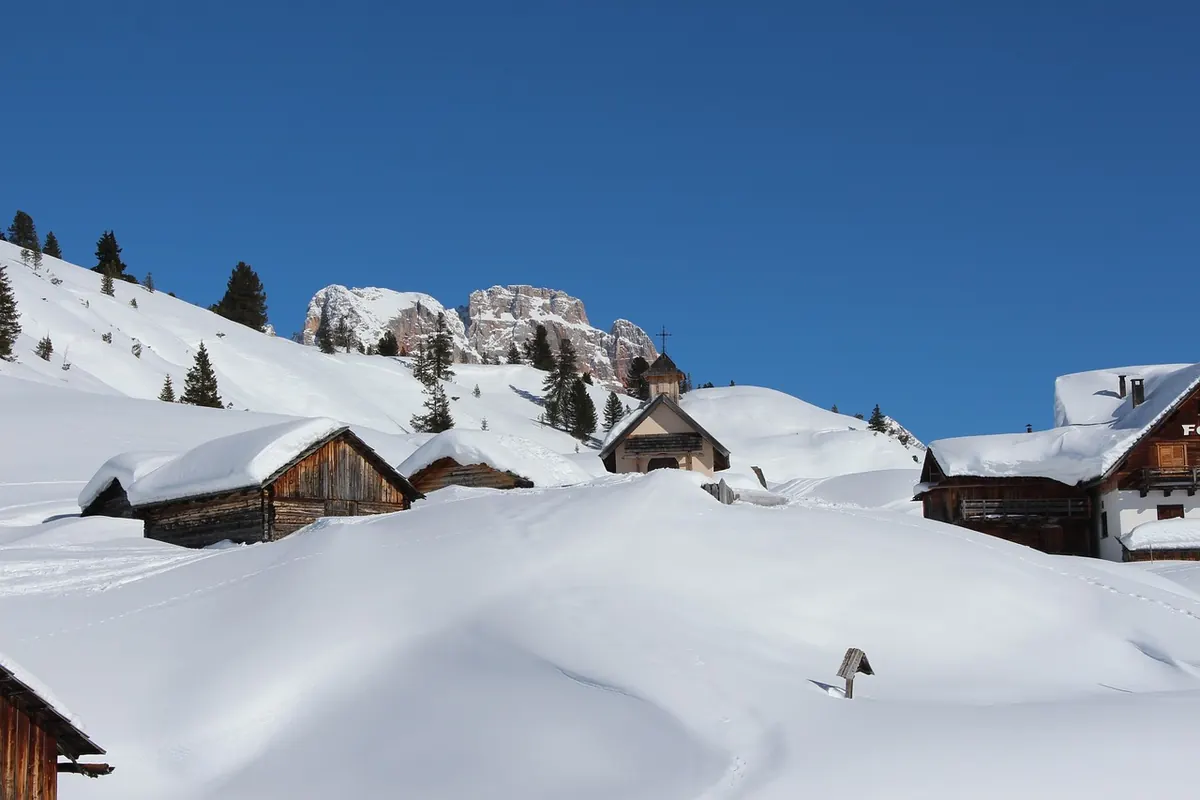
Every winter someone tells you the Dolomites are a car place. The passes are white, the villages are strung out along the valley floors, and the lifts sit far above the tree line where no bus would sensibly go. Then you unfold a railway map and notice that the whole eastern half of the range is threaded with trains that run through February, cost less than a tank of fuel, and stop within walking distance of the lifts.
This route leans on two of those railways — the Brenner line and the Puster Valley line — plus the ski buses that fan out from their stations. It takes about a week at an unhurried pace, works from either Innsbruck or Verona, and never asks you to fit snow chains in the dark.
The shape of the route
Fortezza (Franzensfeste) is the hinge of the whole thing. It is the junction where the north–south Brenner line meets the east–west line into the Puster Valley, which means you can base yourself in one valley, ride twenty minutes, and be in another. From there the stages run like this:
- Arrive at Fortezza from Innsbruck, Verona or Bolzano, and take the short hop north to Bressanone for two nights.
- Bressanone to Brunico on the Puster Valley line, changing at Fortezza, for two nights under the Kronplatz.
- Brunico to Dobbiaco or San Candido, still on the same line, for two nights among the cross-country trails.
- Back west to Ponte Gardena, then the bus up to Ortisei in Val Gardena for the final night or two.
- Home via Fortezza and the Brenner line, or south to Verona.
Everything on that list is a scheduled service that runs all winter. No car, no parking, no scraping ice off a windscreen at seven in the morning.
Stage one: Fortezza, Bressanone and the Plose
Bressanone (Brixen) is the sensible first stop because it is a real town rather than a resort — bakeries that open early, a cathedral, an abbey at Novacella twenty minutes' walk out of the centre, and a Christmas market that lingers into the first days of January. It also has one of the better warm-up hills in the region.
The Plose cable car leaves from Sant'Andrea, a hamlet above town, and a local bus connects Bressanone's bus station with the valley station. Check the board at the bus stop rather than relying on memory: the winter timetable changes in December and again around the middle of January. Up top there is a long, gentle blue run, a couple of steeper options, and a sledging track that stays open into the evening on certain days.
If the weather closes in, stay low. The cloister at Novacella and the diocesan museum will fill a grey afternoon without any need for a lift pass.
Stage two: Brunico, Kronplatz and the Puster Valley
From Bressanone you ride south to Fortezza and change onto the Puster Valley train. The connection is usually a matter of minutes on the same platform, and the run east through Rio di Pusteria and Vandoies is the sort of journey that makes you put the phone away — terraced fields, a river the colour of slate, and the first pale wall of the Kronplatz appearing on the left.
Brunico is the practical hub. The station sits ten minutes' walk from the old town, where the Messner Mountain Museum occupies the castle, and a local ski bus links the station area with the Riscone cable car that climbs to Kronplatz. That lift is the reason many people come: a wide, treeless plateau of intermediate pistes with long views towards the Odle.
What to do with a bad-weather day
Ride one stop further to San Lorenzo in Secca, or stay in Brunico and walk the arcaded main street. The town also has a decent indoor pool and a library that stays open late, which sounds like faint praise until you have spent a white-out afternoon there with a book.
Stage three: Dobbiaco, San Candido and the Cortina link
The train continues east to Dobbiaco and then San Candido, and this is where the trip changes character. Dobbiaco is cross-country country: the Nordic Arena, a network of groomed trails that starts almost at the station, and a landscape of meadows and larch that feels quieter than the lift-served valleys.
San Candido is worth at least a day. The collegiate church is Romanesque and rather beautiful, and the Baranci lifts are a short walk from the platform — a rare thing anywhere in the Alps. Sledging is taken seriously here, with a purpose-built track and rentals at the bottom.
From Dobbiaco, buses run south over the Cimabanche pass to Cortina d'Ampezzo. Be aware that the toll road up to the Tre Cime is closed in winter, so the classic view of the three peaks is a snowshoe or ski-touring objective reached from Misurina or Lago di Landro, not a drive. If you are going off marked trails, go with a guide or a group that knows the snowpack.
Stage four: Val Gardena via Ponte Gardena
To finish, retrace the line west to Fortezza and pick up the Brenner train south to Ponte Gardena (Waidbruck). From the station, buses climb the hairpins to Ortisei in about half an hour. The connection is not always seamless — the bus and the train are run by different operators and do not always wait for each other — so leave a margin rather than sprinting.
Ortisei is the most convenient base in the valley: the Seceda and Alpe di Siusi lifts are both in or near the centre, and the Sella Ronda circuit is reachable from the village lifts. The Alpe di Siusi is a fine place to wander on foot or snowshoes even if you never clip into skis.
Tickets, timetables and things that catch people out
None of this is difficult, but a few details save real money and real frustration.
- Ask about the guest pass first. Many hotels and guesthouses in South Tyrol issue a card covering local buses and regional trains for the length of your stay. Find out before you buy anything.
- The Mobilcard covers regional trains and buses across the province for one, three or seven days — useful if your accommodation does not provide transport.
- Validate paper tickets. Machines on platforms and on board are common, but a stamped ticket is the one that counts.
- Watch the last runs. Ski buses down from lift bases tend to stop in the late afternoon, well before dinner. Photograph the timetable at the lift station in the morning.
- Sunday and 1 January services are thinner. Plan arrivals and departures around that.
- Snow delays buses, not trains. If you have a flight or a long onward connection, give yourself a buffer of a few hours.
- Taxis are scarce in the valleys and expensive when you find one. Do not build an evening around one.
Before you go
Book accommodation within ten minutes' walk of a station or a bus stop; that single decision does more for a car-free trip than any amount of planning. Pack light enough to carry up a flight of stairs in boots, and bring a small daypack rather than a wheeled case for the ski-bus legs.
Check the regional transport app the night before each move, keep one flexible day in the middle of the week for weather, and remember that a white-out on the mountain is often just cloud in the valley — the train will still be running, and the bakery in Bressanone will still be open.
Photo: FalAl / Pixabay
Related posts
More stories you’ll love reading