
You check the forecast, see minus six, and put the boots back in the cupboard. Or you see the same number, shrug, and drive to the trailhead. Neither reaction is wrong on its own — but the temperature on your phone tells you surprisingly little about how a winter hike will actually feel. A calm, sunny morning at minus six, on dry snow, with the low sun on your back, can be one of the most comfortable walks of the year. A damp, windy minus one on an exposed ridge, with wet snow falling sideways, can turn serious within an hour.
What matters is the combination: air temperature, wind, precipitation, and how much daylight you have left. Here is how to weigh all four together and decide whether to go, shorten the route, or stay in the valley.
Wind chill is the number to plan around
The thermometer measures the air. Your body cares about heat loss. Wind strips away the thin layer of warmed air around your skin and replaces it with cold air, over and over, which is why a breezy minus eight feels so much harsher than a still minus twelve. Most forecast apps show a wind chill or "feels like" figure. Treat that as the honest number, especially for anything above the treeline.
The effect compounds quickly. Around minus five with a 30 km/h wind, exposed skin loses heat at a rate closer to still air twice that cold. Add your own movement — walking into a headwind, losing the shelter of the forest as you climb — and the car park and the summit can feel like two different seasons on the same morning.
So dress for the wind, not for the car park. If the route touches an exposed col or summit, carry the insulated layer and the windproof shell even when the valley is dead calm, and plan your food stop in a sheltered spot rather than at the viewpoint everyone photographs.
A working temperature ladder
These bands assume dry conditions and moderate wind. Use them as a starting point, then adjust for the two sections below.
- Above 0 °C: the wet-cold band, and often the most awkward. Slush, rain, heavy wet snow, ice hidden under a layer of water. You sweat inside your shell on the climb and chill the moment you stop.
- 0 to −8 °C: the sweet spot. Dry snow, firm trails, crisp air, no drama. Layering and spare gloves still matter, but the mountain is forgiving.
- −8 to −15 °C: cold but perfectly manageable with the right kit. Keep stops short, keep water and phone batteries against your body, and be careful with bare fingers when adjusting bindings or crampons.
- −15 to −25 °C: serious cold. Stay in the trees where you can, avoid long exposed ridges, choose short routes with easy exits, and don't go alone.
- Below −25 °C: a different sport. Either you know exactly what you're doing, or you pick a low valley walk in the forest — or a very long lunch.
One caution: a wet −2 °C is usually harder work than a dry −12 °C. The number matters, but only alongside what's falling out of the sky.
Wet cold catches more people than deep cold
Freezing rain, sleet and heavy wet snow are quietly more dangerous than crisp cold, because they attack your insulation instead of testing it. A shell that wets out, gloves that soak through in ten minutes of handling a rope or adjusting snowshoes, boots that fill with slush — none of that shows up on a temperature chart.
The practical answer is redundancy. A hooded shell that still beads water. Two pairs of gloves: a thin liner you can wear while doing fiddly things and a warmer pair for the descent. Gaiters. No cotton next to your skin. And one dry base layer in a waterproof stuff sack, kept for the moment you stop for good. Watch the ground too: freezing rain glazes rock steps, roots and wooden bridges into something closer to a skating rink than a trail.
Daylight is part of the temperature question
In December and January, the light leaves a north-facing slope long before sunset, and the temperature goes with it. The coldest hour of a short day is often the one you spend descending, tired, no longer generating much heat, on legs that have stopped paying attention.
Start earlier than feels natural. Set a turnaround time, not just a turnaround point, and write it down where you'll see it. Carry two lights rather than one, and keep the spare battery somewhere warm — cold drains batteries fast, and a headlamp that died at 17:00 is a small problem that becomes a large one at 18:30. If the route is long and the daylight is thin, choose the shorter option. The mountain keeps.
Your own threshold matters more than any chart
Two hikers read the same forecast and should not make the same decision. Acclimatisation, body size, fitness, the quality of your layers, and how well you read terrain all shift the line. Someone who has been walking in the cold all winter will be comfortable in conditions that send a summer-only hiker shivering back to the car. Ask yourself these before you leave:
- What is the wind chill at the highest, most exposed point of the route, not at the car park?
- How much of the day will I be standing still rather than moving?
- Is there rain, sleet or wet snow anywhere in the forecast?
- Do I have a dry layer and dry gloves in the pack, or only the ones I'm wearing?
- What time does the sun leave this slope?
- Where does my shortcut start, and can I find it in flat light?
- Is anyone in the group on their first genuinely cold hike?
If two or three of those answers are uncomfortable, that's your answer. Shorten the route.
When to shorten the route or turn around
Cold becomes a problem gradually and then suddenly. Some signals worth taking seriously: shivering that doesn't stop after you add a layer and eat something; fingers that stay numb after ten minutes tucked inside your jacket; white or waxy patches on fingertips, nose or cheeks; a companion who has gone quiet, clumsy or unusually slow; wind strong enough that you can't walk a straight line on the ridge; a glazed path that turns every step into a negotiation.
Any one of those is reason enough to drop to a lower, sheltered line and head back. Two of them together is a clear stop. Frostbite and hypothermia are serious, so treat the list above as general awareness rather than a diagnosis: a proper winter first-aid course is worth the weekend, and in a real emergency get medical help rather than trying to warm someone up on the hillside.
The short version
Before every winter hike, read three numbers: wind chill at the highest point of the route, the chance of wet precipitation, and the time the sun leaves that slope. Then choose the route the numbers support, write down your turnaround time, and tell someone where you're going. If the combination looks ugly, take the valley walk instead.
Staying low is a decision, not a failure. The ridge will still be there in February, and the walk you actually finish is always better than the one you abandoned halfway up with wet gloves and no light.
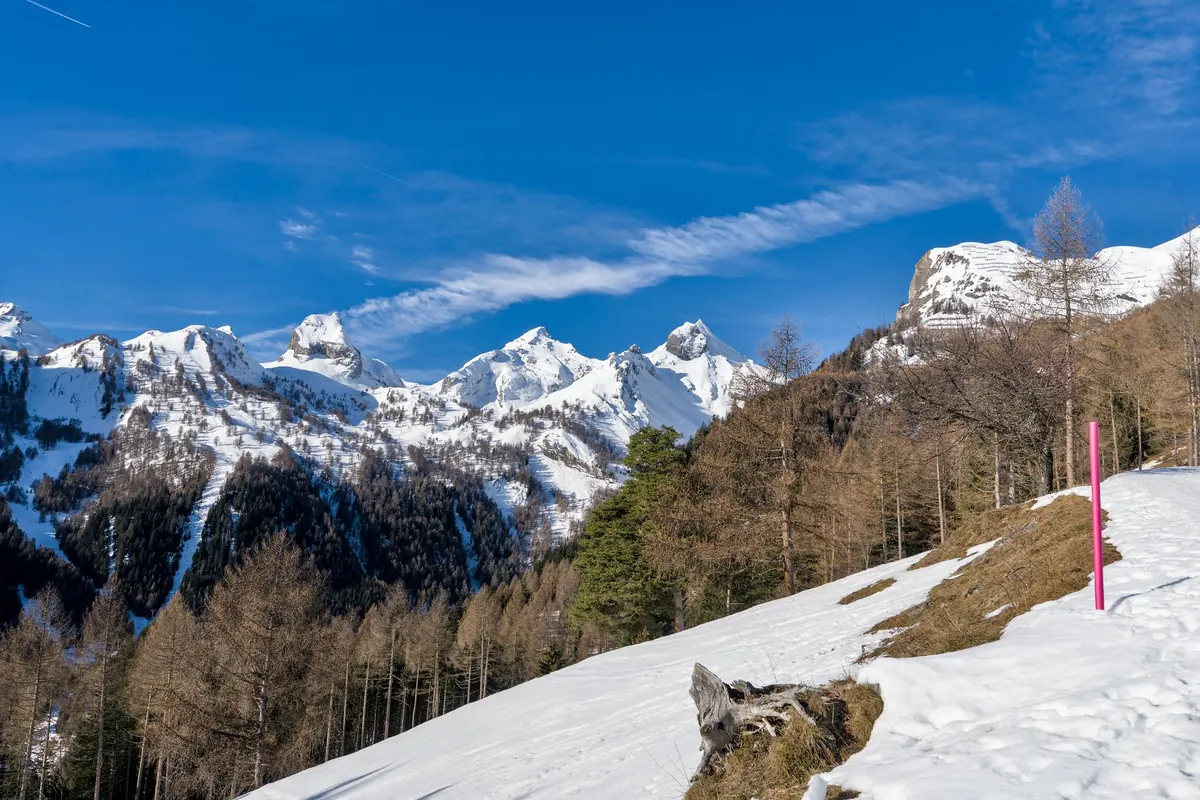
Photo: Jean-Paul Wettstein / Pexels
Related posts
More stories you’ll love reading